Showing posts with label Faith: Lofty Musings. Show all posts
Sunday, July 31, 2016
Loss is so, so many things. Today, loss is this: I am watching Finding Dory at a theater with my littlest girl on her birthday. On screen, the blue fish finds a single seashell on the ocean floor, and then another and another, and she begins to follow. Suddenly, the picture widens and zooms out to reveal, not just one shell path but dozens, radiating out from the center, each painstakingly laid, we learn, by her grieving and determined parents-- each one meant to lead Dory home. And all I’m thinking is, I wish I could find my mom at the end of a trail of shells, or crumbs, or whatever. I can’t. Instead, I will find her at the end of a trail of days, carefully laid out by an Architect of lives. And that’s not a path I can run down. All I can do is walk it and weep and walk it some more.
It is just a moment, truly, that my face crumples in pain. I know it is because it’s all I allow myself when my kids are near. But that single moment is caught by little eyes, even in the dim light of the theater. Those eyes have grown accustomed to turning to me whenever a moment turns sad because, more often than not, they’ll see a mama with tears tracking down her face.
Love and hope is so, so many things. Today, love and hope is this: A little hand finds my arm in the dark. “I know what you’re thinking of,” is all she whispers. And then she is curled over the arm of her seat, resting her head against me to offer me what she can. If the trail I walk is made up moments like this, I will be OK.
Thursday, February 18, 2016
::Mom::
I couldn’t make poetry out of words this time. Wrestling with the
words to explain what I’ve lost would not make the loss pretty or more
profound. My mom died. And she died really suddenly. And I didn’t get to
see her the week she died because my life got in the way. And I can’t
quite grasp with any real clarity what it was we last said to one
another. And I don’t remember our last hug. And that’s just brutal. I
can’t make poetry out of that. So, I’ve just let the words do what they
want. I’ll just be the raw, completely broken-hearted eldest daughter
that I am, and it will be enough.
I orbited around my mom like a tiny moon in a gravitational thrall. I would move about my week in a circle that always led back to her. All of us kids did. The four of us have this internal compass that was always oriented back towards her and if we walked away from her a little too far, for a little too long, something in us would start to ache until our feet turned back. Now that she’s too far for us to get to, that ache is a constant, un-abating thing sitting right here in our chests. I caught a few of us actually walking around this week trying to rub the pain away.
She knew her kids in an essential way. By that, I mean that she knew our essences, our cores, our fundamental selves. She watched us. Studied us. Learned us. Then she coaxed the beautiful bits up to the surface and ruthlessly hauled up the ugly bits as well. She wanted to really see us, to hold us up to the light and really see us, because to be known is everything. She looked at her children with clear eyes: Beautiful and sinful and beloved.
My mom loved so much better than anyone I know. She found it easy to love, I think. There wasn’t a type of person she was in the habit of loving. She just loved whoever was put in front of her. Our kitchen, and our coffee maker, and my mom’s love were a life-giving, even life-saving combination. She listened as intently as she did because she actually wanted to hear what you had to say. And the things she said landed so well because they were honest, insightful and usually true. Her determination to say the truest thing rather than the nicest thing made it harder for any of us to cuddle up close to our favourite sins. Like the gardener she was, she unearthed things that needed digging up and tucked new, vibrant, healthy things inside us instead.
This was such a hard year for my mom. We watched a woman who had always been on her feet drop to her knees because of a body that had betrayed her. The couch and a warm blanket were about all she could get out of most days. For obvious reasons she was deeply unhappy, mostly because the pain made her weary, and her sensitive body couldn’t be touched, not by her husband, not by her children, and not by her grandchildren. But here’s the thing, that skill my mom had for unearthing the bad and replacing it with good, it wasn’t just a skill she used for others. She was well practiced at digging deep into her own heart as well. She never hid this refining process from her children, so we saw it at work often enough to recognize it. This is what I saw my mother do with her couch, her blanket and her battered body; she surrendered it all in prayer through the dark, sleepless hours of every morning. At 3:30 a.m. every day, when her aching bones stole her sleep away, she’d lie on that couch, tucked under her favourite blanket and talk to her God. What was born out of necessity became a marrow-deep delight. She would describe her morning chats with God to me with a child-like glee. And her joy was my joy.
My mom doesn’t need pain to teach her to talk to God anymore. But apparently I do. I am in pain. So, on the couch, under a warm blanket, I will be talking to Him. I am her eldest daughter. I am raw and completely heart-broken, but her joy was my joy, her God is my God and that is enough.
I orbited around my mom like a tiny moon in a gravitational thrall. I would move about my week in a circle that always led back to her. All of us kids did. The four of us have this internal compass that was always oriented back towards her and if we walked away from her a little too far, for a little too long, something in us would start to ache until our feet turned back. Now that she’s too far for us to get to, that ache is a constant, un-abating thing sitting right here in our chests. I caught a few of us actually walking around this week trying to rub the pain away.
She knew her kids in an essential way. By that, I mean that she knew our essences, our cores, our fundamental selves. She watched us. Studied us. Learned us. Then she coaxed the beautiful bits up to the surface and ruthlessly hauled up the ugly bits as well. She wanted to really see us, to hold us up to the light and really see us, because to be known is everything. She looked at her children with clear eyes: Beautiful and sinful and beloved.
My mom loved so much better than anyone I know. She found it easy to love, I think. There wasn’t a type of person she was in the habit of loving. She just loved whoever was put in front of her. Our kitchen, and our coffee maker, and my mom’s love were a life-giving, even life-saving combination. She listened as intently as she did because she actually wanted to hear what you had to say. And the things she said landed so well because they were honest, insightful and usually true. Her determination to say the truest thing rather than the nicest thing made it harder for any of us to cuddle up close to our favourite sins. Like the gardener she was, she unearthed things that needed digging up and tucked new, vibrant, healthy things inside us instead.
This was such a hard year for my mom. We watched a woman who had always been on her feet drop to her knees because of a body that had betrayed her. The couch and a warm blanket were about all she could get out of most days. For obvious reasons she was deeply unhappy, mostly because the pain made her weary, and her sensitive body couldn’t be touched, not by her husband, not by her children, and not by her grandchildren. But here’s the thing, that skill my mom had for unearthing the bad and replacing it with good, it wasn’t just a skill she used for others. She was well practiced at digging deep into her own heart as well. She never hid this refining process from her children, so we saw it at work often enough to recognize it. This is what I saw my mother do with her couch, her blanket and her battered body; she surrendered it all in prayer through the dark, sleepless hours of every morning. At 3:30 a.m. every day, when her aching bones stole her sleep away, she’d lie on that couch, tucked under her favourite blanket and talk to her God. What was born out of necessity became a marrow-deep delight. She would describe her morning chats with God to me with a child-like glee. And her joy was my joy.
My mom doesn’t need pain to teach her to talk to God anymore. But apparently I do. I am in pain. So, on the couch, under a warm blanket, I will be talking to Him. I am her eldest daughter. I am raw and completely heart-broken, but her joy was my joy, her God is my God and that is enough.
Tuesday, January 05, 2016
::Barometers of Change::
It’s almost as though their small bodies are barometers of change. They all get sick at the end. Last night I cradled her feverish body in the crook up my arm. Her whimpers quieted almost immediately, and her breathing slowed as she dipped down into sleep. And that’s when I let myself remember. I have been here twice before, a fever-hot child in my arms the very week they are leaving me. They all get sick at the end, a lowering of defenses as they sense somehow that the world around them is about to tilt and shift. Again.
Monday, June 15, 2015
::The Far Side of Change::
Things change.
The warm, ambient sameness that lulls us like an afternoon nap
is not a thing we can presume to keep.
Because just when we grow most fond of it,
Just when it settles around our frame and contours us from head to toe in a cocoon,
It rips it's skin-warmed blanket from our bodies and tilts us out of our rumpled sheets and into the chill of the day.
And it does not welcome us back.
There we stand, arms encircling our ribs, blinking in an effort to sharpen our focus on an alien context.
We run our hands along the bedpost, brush a finger over the familiar threads of a well-worn quilt.
Like a tidal pull, we're leaning over the place we lay moments before, the place that is still etched with our body's well-worn imprint.
We could hold this posture. We could. And slowly, we'd calcify into a hardened, bent thing. A gnarled willow weeping over what was.
Eyes closed, there is a bracing within. Clutched hand opens.
Spine straightens. Feet pivot. We turn.
We walk from cradle to current
To be swept up
Wholly and completely
Into what waits
on the far side of change.
The warm, ambient sameness that lulls us like an afternoon nap
is not a thing we can presume to keep.
Because just when we grow most fond of it,
Just when it settles around our frame and contours us from head to toe in a cocoon,
It rips it's skin-warmed blanket from our bodies and tilts us out of our rumpled sheets and into the chill of the day.
And it does not welcome us back.
There we stand, arms encircling our ribs, blinking in an effort to sharpen our focus on an alien context.
We run our hands along the bedpost, brush a finger over the familiar threads of a well-worn quilt.
Like a tidal pull, we're leaning over the place we lay moments before, the place that is still etched with our body's well-worn imprint.
We could hold this posture. We could. And slowly, we'd calcify into a hardened, bent thing. A gnarled willow weeping over what was.
Eyes closed, there is a bracing within. Clutched hand opens.
Spine straightens. Feet pivot. We turn.
We walk from cradle to current
To be swept up
Wholly and completely
Into what waits
on the far side of change.
Monday, April 20, 2015
::Grey & Gold::
Monday, March 16, 2015
::Naming Dragons::
Fairy tales do not give the child his first idea of dragons. What
fairy tales give the child is his first clear idea of the possible
defeat of dragons..."
Life is full of dragons. They are breathing fire down our necks in ways seen, unseen and somewhere in between. By default, we fear them. Reflexively, we turn from them at a run. Parentally, we fortify our children against them, shielding their eyes from claw and teeth. Unless, of course, we don't.
Trouble has been brewing, and not the lurking, stick-to-the-shadows kind. It is the kind of trouble that has weight and presence, passing through walls and filtering through avenues of word and deed until it finds us. Now that it has, I've had to make a choice regarding the telling of tales, so to speak. Do I look into questioning eyes and give vague non-answers? Or do I name the dragon and hope that by doing so the fire in it's belly goes cold and its claws retract?
I guess what I'm saying is there's a bit of Chesteron in me; scary tales do not give our children their first idea of fear. {They already know what fear is.}What scary tales give our children is their first clear idea of the possible defeat of fear.
~G.K.Chesterton {paraphrase}
Trouble has been brewing, and not the lurking, stick-to-the-shadows kind. It is the kind of trouble that has weight and presence, passing through walls and filtering through avenues of word and deed until it finds us. Now that it has, I've had to make a choice regarding the telling of tales, so to speak. Do I look into questioning eyes and give vague non-answers? Or do I name the dragon and hope that by doing so the fire in it's belly goes cold and its claws retract?
I guess what I'm saying is there's a bit of Chesteron in me; scary tales do not give our children their first idea of fear. {They already know what fear is.}What scary tales give our children is their first clear idea of the possible defeat of fear.
Be strong and courageous. Do not fear or be in dread of them, for it is the Lord your God who goes with you. He will not leave you or forsake you.
~Deuteronomy 31:6
~Deuteronomy 31:6
Saturday, October 18, 2014
::Water Problem::
It’s our system, but it isn’t a perfect system. Pitchers break. We’ve shattered more glass than a cathedral’s worth of windows. So, we gave up on glass and moved on to metal. But even pitchers that don’t break only hold a finite amount of water. We fill it. And fill it. And fill it. And, I do not remember what fresh, cold water tastes like. Our poor little pitcher does not come with an in-built cooling system, nor a filter. It’s only job is to hold it’s contents.
Has that become my job description? Jo: Wife. Mother of six. Reservoir of old material, levels dropping, inspiration growing stale? Maybe it is. I am guilty of tapping into my own experience to diagnose, bandage and sustain myself through my present circumstances. I do it a lot. Instead of lifting a fresh, glittering drop of scripture to my lips, or letting the morning mist of daily prayer soothe my skin, I lower the ladle of my hands deep into the old, murky water of recycled thoughts and self-muddied lessons learned. I am a pitcher, filled with once-crystalline revelations, now gone warm and still.
Anyone could tell you that running water’s the sweet stuff. I don’t know anyone who would stand beside a leaping, chattering stream, and turn away to lap up the water from the puddle beside it. But we do that. All the time we do that when we don’t go to God for refreshment.
As the deer pants for streams of water,
so my soul pants for you, my God.
Psalm 42
Are you thirsty? I’m thirsty. Let’s not gather around the water cooler. Let’s go down to the river and drink.
Thursday, July 24, 2014
::Attached::
To anyone who has ever told me; “I just don’t think I could do it. I’d get too attached,” please don’t say that. And to anyone who has ever said to me; “I just couldn’t. It would break my heart,” stop and think for a minute. What I think you mean is that foster parenting is too hard for you. And what I think you mean is that it would hurt too much for you to give it a try. But when I am about say goodbye to a child I’ve loved for months and months, and you say that, what I hear is this: “You feel less than I do. You can do this because you have a stone-heart superpower that makes it easy for you.” That’s not true. I get attached. Very attached. And my heart is so very broken. I am not braver than you, or stronger than you, and there is nothing easy about what I do. Just so you know.
Wednesday, April 16, 2014
::We see what we want to see::
It's faded and the weather is stealing it's strength with every passing season. But it is beautiful in its waning.
All those years ago, the palm wavers who lined the streets of Jerusalem saw a man on a donkey and went wild with delight. They looked at him and saw a king. They saw a warrior who would make tyrants bow and emperors pay. What they didn't see was that his shoulders were shuddering and heaving with sobs. Their king was crying.
For them.
Because they didn't really see him at all. They saw what they wanted to see.
I've been asking myself these days whether my eyes are clear. I've been seeing things. Lots of things. And I have been contemplating moves and counter-moves based on the things I've seen.
But, what if my eyes are liars? What if my eyes are taking orders from my wants and longings? What if, somewhere along the path from retina to visual cortex, my blueprints for reality are being hijacked by my latent post-impressionist sensibilities? And suddenly my lines are skewed, and my colours arbitrary. Walls hung with swirling sky and bubblegum sands. All the while, real life presents itself calmly outside my window. Unseen.
There is a little Van Gogh in us all-- we see what we want to see.
But I want to really see. And chances are, I'll know it's the real deal because I'll almost miss it. It won't be showy at all. And I probably won't like it much. Reality won't be a picture I hang on the wall, but a book I don't want to open that will sit on the bedside table beckoning. It will be the last thing I see when I fall asleep. The first thing I see when I wake. And I will have to reckon with it.
And when I do, I will not see what I want to see. I will see heaving shoulders and the paths where tears left salt behind. But,
I will see.
Isn't it? Maybe it's just me, looking for beauty to saturate an inner monochromacy. After all, isn't it true that we see what we want to see?
For them.
Because they didn't really see him at all. They saw what they wanted to see.
But, what if my eyes are liars? What if my eyes are taking orders from my wants and longings? What if, somewhere along the path from retina to visual cortex, my blueprints for reality are being hijacked by my latent post-impressionist sensibilities? And suddenly my lines are skewed, and my colours arbitrary. Walls hung with swirling sky and bubblegum sands. All the while, real life presents itself calmly outside my window. Unseen.
There is a little Van Gogh in us all-- we see what we want to see.
But I want to really see. And chances are, I'll know it's the real deal because I'll almost miss it. It won't be showy at all. And I probably won't like it much. Reality won't be a picture I hang on the wall, but a book I don't want to open that will sit on the bedside table beckoning. It will be the last thing I see when I fall asleep. The first thing I see when I wake. And I will have to reckon with it.
And when I do, I will not see what I want to see. I will see heaving shoulders and the paths where tears left salt behind. But,
I will see.

Monday, March 24, 2014
::Emptied and Filled::
I used to say I wanted to adopt someday. I
envisioned a dark hand in my pale one. And maybe a few more little
hands as well. A full colour pallet of little hands. It was a pretty
picture that I now realize was sustained mostly by a rosy-coloured
romanticism. Adoption and Christianity just seemed to go together. But
whether or not adoption and I went together was another thing entirely.
I also used to say that I’d
marry young and have a handful of kids. I envisioned a mob of us. Loud.
Chaotic. Bursting with messy love. In this case, hope became reality at
a whirlwind pace. I met my husband at 19, married him at 20 and had my
first child within a year. My next four children came quickly on the
heels of the first. And that loud, chaotic love wrapped itself around me
like a second skin.
Somewhere
along the way I began to learn about being filled and emptied. God
would fill my mind and heart with His designs for me, and I would expend
myself on them. The association was slow in coming, however. In my
immaturity it went down more like this; I would obsess about something
and then go after it with wild abandon, heedless of prayer, meditation
or counsel. Slowly, I realized He was trying to lead me, and it went far
better when I slowed to listen and talk to Him about it.
Simple
as it seems, that was the spiritual process by which my husband and I
became foster parents. We had five healthy, thriving children, the
youngest of whom was three. I couldn’t carry any more children of my
own, but the desire remained. Our home was safe and secure, as was our
marriage. We were inundated with supports of all kinds. And we began to
be all filled up with God’s design. He told us he had more for us to do.
More children for us to parent and to love.
It
was a series of connected messages on a theme. Our local Christian
radio station began Adoption Month and my drive-time was filled with
stories of fostering and adoption. Sermons seemed to refer to God’s
adoption of us as sons and daughters everywhere I went. Friends of ours
began the process of becoming foster parents. And finally, we visited a
church where we reconnected with a family that looked a lot like ours.
They had five kids of their own, but had launched into foster care a few
years earlier. It was in the air. A palpable calling.
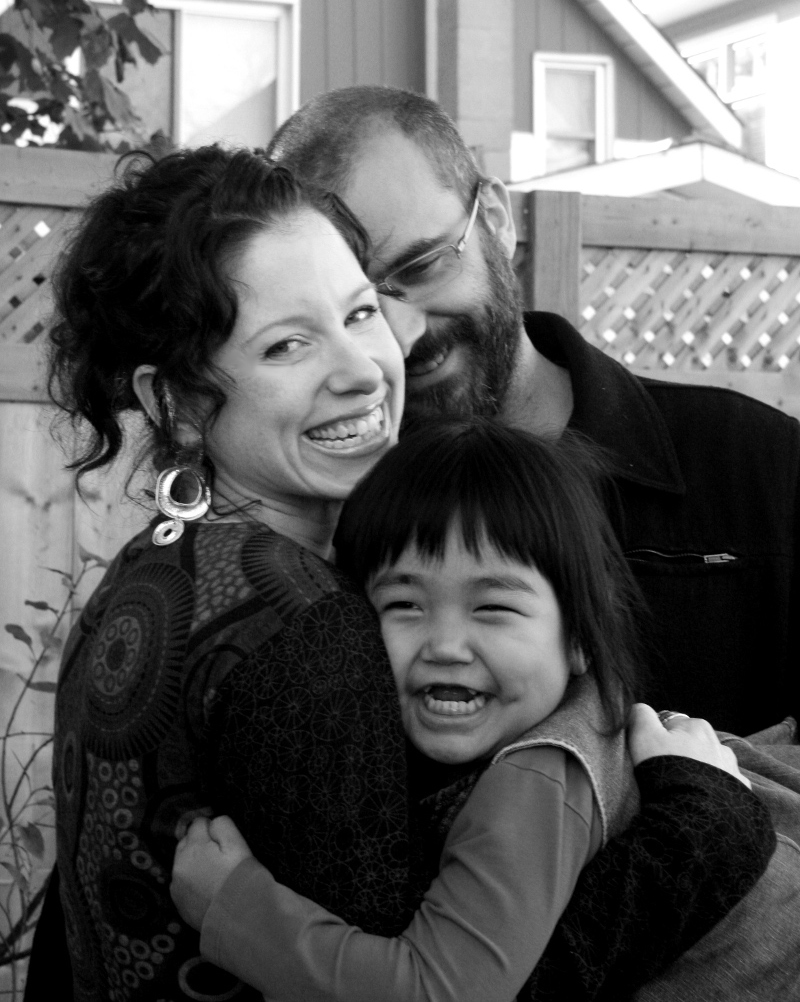
The
practical unfolding was a high-speed ride that was a pleasure to be a
part of. I made a first inquiry online to our local Children’s Aid
Society one morning as I sat sipping coffee. That was all it took to
rapidly launch us on to a 6-month path to becoming full-fledged foster
parents. Everything lined up for us. We had prayed for a foster care
worker who would understand our hearts. We got her. We prayed for a new
vehicle that would fit a few more little passengers. Within
a month a huge white van with a bumper sticker that read “I heart
foster parenting” on the back was parked in our driveway.
We flew
through every hoop. Even the sticky ones that come up when a Christian
family butts up against a secular system. The way was smooth.
Why
fostering rather than adoption? I credit my husband with offering up
the gem of insight that settled us on this path. He said that through
adoption we would be able to help a few kids. But through fostering we’d
be able to help many. Foster care comes with a special kind of pain
because you can never ever mistakenly think of these kids as your own.
They all have mothers and fathers waiting for their return. But, therein
is found the other jewel of an opportunity in foster care; it is a
ministry of love to the moms and dads who are watching and waiting. You
are given a chance to love them right alongside their children.
And
so, with all the i’s dotted and t’s crossed, we waited. And then on
June 13th 2012 we got the call. A little girl needed a home. . .
Ten minutes. That was the amount of time I was given to decide if I was ready to change my life. My whole family’s life.
The call came around noon. “We have an Inuit toddler who needs a home. Will you be ready for her in an hour?”
This was it. I called my husband and couldn’t reach him at first. I
paced up and down the kitchen in prayer. When he finally called, he said
only this; “Yes. Let’s say yes. This is why we’re doing this.”
An
hour later she arrived. Sleepy and dishevelled, she watched us
carefully, clinging to her sippy cup. Our two dogs were an asset as
their wet greeting eased her out of her confusion and into giggles. And
then she was in my arms, swinging with me on our old wooden swing.
Minute by minute swaying her way deep, deep into our hearts.
A year and a half. That is the amount of time we
had to braid her long black hair and practice our tongues at the
strange new words that were home to her. A year and a half to watch her
grow steady on her feet and move steadily into her place as baby of the
family. A year and a half of that husky laugh, that smile, those
dimples. Of memorizing the shape of her and the way she fit into our
arms. A year and a half of marvelling at her ability to embrace every
new day, place, and person as though they were an anticipated delight. A
year and a half is the amount of time we had to begin to lose sight of
losing her.
Until
we did. You see, our little girl had a terrific mother. In this system,
we have been told, most grow weary and choose vice over motherhood. But
there are others who fight, kick, claw their way back to health and to
their children. This little girl had a mother like that. It didn’t take
long for us to see it, and it made us want to join her fight. The battle
of the broken should never be a spectator sport.
It
isn’t enough to show an empty-armed mother that you love her child; the
one you get to hold in your arms at night instead of her. That
heartbroken mother will take in the picture of you in your nice house,
with your shiny family. And she will only feel more broken if she
watches from a distance as her child is loved by people deemed more
stable, more secure, more safe. We knew there had to be a gathering-in.
We wanted to honour her for every one of the 18 months that shaped this
child before she made it to our door. We asked her to teach us all the things we didn’t know about her daughter. And she did.
As
we opened up wide our life, our home and our church to her, this mom
opened herself up wide in response. She helped us grow more familiar
with her language: “Akuluk means I love you.”
It was with her that we first tasted whale meat-- an experience I hope
never to repeat, mind you. . . One day, she gifted me with a beautiful
hair clip made from seal pelt. She told me that her Aunt had made it to
thank me for taking such good care of her little niece.
As
she gave, she also allowed herself to receive. She became a familiar
face at our church, even though it must have initially been very
uncomfortable for her. We invited her to join us for afternoons at my
parents’ home where she and my Mom would discuss the finer points of
mystery novels. She joined us for many celebrations throughout the time
we cared for her daughter, and she did so without reservation. I will
never forget the day we gave her a ride home, and as she climbed out of
the van she leaned in to kiss our daughter. “I love you,” she said. And I knew she meant it.
A lifetime. That is the amount of time we
will remain awed by the gift of having lived this. We are soberly aware
that this story is a rare gem in the circles of social care. But it is
our gem. A little while ago, our girl came to spend the weekend with us.
I watched her run around the house, rediscovering the landscape of her
toddlerhood, and I could barely breathe. I looked up to find my husband
looking back at me. “This hurts” I
mouthed silently across the room. He nodded. Yes, it hurts. But it only
took a minute for pain to be covered over by awe at the stunningly vast
parameters of love. Look what love does! It gives. It takes. It shares.
It loses. And it tenaciously roots and grows through it all.
Thursday, November 07, 2013
::Love & Unseen Things: A Poem to Dad on his 60th::
We are all knit together by love and unseen things
Things absorbed into pores, breathed into lungs, imprinted on hearts
Conceived by eternal mind we passed from idea to earth
Into arms of waiting ones;
Trembling guardians
Armed with nothing but love and unseen things
And we are knit together by love and unseen things Side-long, stolen glances
Eyes crinkling with anticipation
Bedtime tales infused with chameleon-voiced magic
Dull Monday night roar below guiding the way to open arms
Words of comfort guiding the way through fear
Willing co option into grueling tasks, seen through to the bitter end
Crafted words gifted to us all: Memorials of intentional love
Inclination to laugh first. Laugh loud. Laugh long
And we are knit together by love and unseen things
Back-slung gigglers hauled up to bed.
Jello trees and snuggles please
Humble pride in your little charges
The giving of gifts made personal and with care
Eliciting laughter, a common and welcome pastime
And we are knit together by love and unseen thingsThings absorbed into pores, breathed into lungs, imprinted on hearts
Conceived by eternal mind we passed from idea to earth
Into arms of waiting ones;
Trembling guardians
Armed with nothing but love and unseen things
And we are knit together by love and unseen things Side-long, stolen glances
Eyes crinkling with anticipation
Bedtime tales infused with chameleon-voiced magic
Dull Monday night roar below guiding the way to open arms
Words of comfort guiding the way through fear
Willing co option into grueling tasks, seen through to the bitter end
Crafted words gifted to us all: Memorials of intentional love
Inclination to laugh first. Laugh loud. Laugh long
And we are knit together by love and unseen things
Back-slung gigglers hauled up to bed.
Jello trees and snuggles please
Humble pride in your little charges
The giving of gifts made personal and with care
Eliciting laughter, a common and welcome pastime
Curiosity in things that once were, in trenches and cannon fire
Navy star solidarity and late night games
Baggins’s and Borin before bed
The merit of sweat and toil instilled
Limitless “I love you’s”
And we are knit together by love and unseen things
Embracing a tiny red-headed latecomer with joy
Older, but no less willing to:
Toss pigskin, defining intricacies of punting & penalties
Again, bend over schoolboy project--devoted collaborator
Explain when to hold‘em and when to fold‘em
Bond shoulder to shoulder over food and film
We are four who passed by divine hand into your arms
Strawberry hair. Dimpled chins. Freckled noses
We can be seen. Hands held. Laughs heard
But our lives are spaces filled to the brim with love and unseen things
Like air under wing, without them we would fall
You, Dad, give us form and substance with the invisible,
Now absorbed into our pores, breathed in through our lungs and imprinted on our hearts
Thursday, May 23, 2013
::Cold moons and measured teaspoons::
A pervasive sense of awe has clung to me these past few weeks. It stems from being immersed in a study of deep space with the kids. The scale is just so big. The science so inadequate. The God upholding it all so astonishing.
I live on a very small scale. Grams of pasta added to salt water. Kilometers of early-morning road traveled down. Minutes of whining to endure until snack time. Pages of book to enjoy before bed. A massive reality looms above, under and around me, but I've lived it out in teaspoons.
There are the things we see, like the fine sifting of powder as we measure it out. And then there is everything else. What do we make of it?
It seems to me that we do one of two things when confronted with the vast and the unknown. We make little of it. Or we make much of it. We hunch our shoulders and live out of small-scale comfort. Or we mythologize and theologize the vastness to suit us.
Two parts of Scripture came together this morning over this idea of the unseen vastness. The children and I are in 2 Kings: "And the servant said, “Alas, my master! What shall we do?” He said, “Do not be afraid, for those who are with us are more than those who are with them.” Then Elisha prayed and said, “O Lord, please open his eyes that he may see.” So the Lord opened the eyes of the young man, and he saw, and behold, the mountain was full of horses and chariots of fire all around Elisha."
Empty hills. The servant saw empty hills when they really weren't empty at all. We see. We don't see. And we make too little of the space in between.
In the Near East, back in the time of Elisha, people feared the moon. They didn't trust the silver orb above them in the darkness. When the Psalmist wrote "no moon shall harm you in the hours of night," he wrote it to a people that believed it could! Lunacy comes from the idea that exposure to the moon could touch a mind. Twist it.
A malevolent moon. Endowed with mythical power it never possessed. We see. We don't see. And we make too much of the space in between.
There are footprints on the moon today. Boot-shape indents that testify to us having made contact with the dead landscape. Of having seen the pits and craters of the reflective rock that circles overhead. We no longer fear it. {The seeds of lunacy are sprung from different soil, it would seem.} In fact, I would go so far as to say that in the collective consciousness, the moon has been conquered. It's Creator, cut out of the heavens. Which brings us full circle to, yet again, making far too little of what we can't or won't see.
In my own study of Psalm 121, I read; "I lift up my eyes to the hills. From where does my help come from? My help comes from the Lord, who made heaven and earth."
He saw. He didn't see. He stood rooted in the space between.
As I grow older, I am more and more comforted by what we are told is truth in the Bible. I anchor myself more and more to the unmovable. It is the book I see. It speaks of realities I don't see. But it keeps me grounded and hopeful when I'm caught between the known and unknown. Cold moons and measured teaspoons. Empty hills and roads run down. I see. I don't see. I go to Him in the space between.
I live on a very small scale. Grams of pasta added to salt water. Kilometers of early-morning road traveled down. Minutes of whining to endure until snack time. Pages of book to enjoy before bed. A massive reality looms above, under and around me, but I've lived it out in teaspoons.
There are the things we see, like the fine sifting of powder as we measure it out. And then there is everything else. What do we make of it?
It seems to me that we do one of two things when confronted with the vast and the unknown. We make little of it. Or we make much of it. We hunch our shoulders and live out of small-scale comfort. Or we mythologize and theologize the vastness to suit us.
Two parts of Scripture came together this morning over this idea of the unseen vastness. The children and I are in 2 Kings: "And the servant said, “Alas, my master! What shall we do?” He said, “Do not be afraid, for those who are with us are more than those who are with them.” Then Elisha prayed and said, “O Lord, please open his eyes that he may see.” So the Lord opened the eyes of the young man, and he saw, and behold, the mountain was full of horses and chariots of fire all around Elisha."
Empty hills. The servant saw empty hills when they really weren't empty at all. We see. We don't see. And we make too little of the space in between.
In the Near East, back in the time of Elisha, people feared the moon. They didn't trust the silver orb above them in the darkness. When the Psalmist wrote "no moon shall harm you in the hours of night," he wrote it to a people that believed it could! Lunacy comes from the idea that exposure to the moon could touch a mind. Twist it.
A malevolent moon. Endowed with mythical power it never possessed. We see. We don't see. And we make too much of the space in between.
There are footprints on the moon today. Boot-shape indents that testify to us having made contact with the dead landscape. Of having seen the pits and craters of the reflective rock that circles overhead. We no longer fear it. {The seeds of lunacy are sprung from different soil, it would seem.} In fact, I would go so far as to say that in the collective consciousness, the moon has been conquered. It's Creator, cut out of the heavens. Which brings us full circle to, yet again, making far too little of what we can't or won't see.
In my own study of Psalm 121, I read; "I lift up my eyes to the hills. From where does my help come from? My help comes from the Lord, who made heaven and earth."
He saw. He didn't see. He stood rooted in the space between.
As I grow older, I am more and more comforted by what we are told is truth in the Bible. I anchor myself more and more to the unmovable. It is the book I see. It speaks of realities I don't see. But it keeps me grounded and hopeful when I'm caught between the known and unknown. Cold moons and measured teaspoons. Empty hills and roads run down. I see. I don't see. I go to Him in the space between.
Monday, March 18, 2013
::Comfortably Numb::
There was a boy who went into the woods with a frozen heart. He wanted to go. To stop feeling. He went to live with the ice queen whose kisses took away the memories that hurt. And he stayed with her in the chill. Not because she made him stay. Because he wanted to stay.This was the premise of the book I just finished with my children, and it’s been swirling inside me ever since. It isn’t like any other book I’ve read, let alone any other children’s book. It’s painfully, achingly reflective of life. Real life.
But he was loved by a girl. She knew the essence of him. She wouldn't have him lost. She went after him through the woods into the cold. She encountered many people in the Wood who had been warped and changed by chasing after lost things they never did find. Instead, they lost themselves.
She found the boy on a lonely patch of ice. He was cold. He felt nothing. When he looked at her he didn’t see home anymore.
She thawed his heart with memory. Not with magic, or force. Just the truth about the way things really were. He followed her back home through the woods. The queen let him go. She’d never needed him. Hearts of ice don’t need or want for anything, after all. They just spread the cold wherever it will be received. . .
The boy and girl walked to the tree line. They walked out of the woods. And “they lived somehow ever after.”
Things get hard. We fight against it and it hurts a lot. The fight exhausts us. It steals the pleasant equilibrium we have worked to maintain. It starts to change us. So we make choices every day. Stay and fight. Stay and change. Stay. Go and surrender. Go and forget. Go.
Few stay. Few fight. Few allow change. Most go.
It’s easier to enter the cold forest and surrender to the numbing. And it doesn’t even require a long journey. Remarkably, this process can take place without moving at all. A mental fleeing. Entirely in the mind.
I have a friend who is sitting on an ice flow. Surrounded. But alone. He saw the forest from his hurting home, and he put his feet on the path and walked through the trees. He let the pull of the cold tug him along until he felt less. Less. Then nothing at all. Nothing true, anyways.
He built himself a palace of fragile nothing. It keeps him very busy. He plays with it’s untethered, movable parts, arranging and rearranging them to please him-- the razor-edged ice shard puzzle of his life. Funny thing is the pieces never really lock into place. Something never ever fits. But he has learned not to notice that he wears his life like a high-end jacket in a size too small.
Like the boy in the story, this boy is loved too. He is being followed. Pursued. He is being tracked through the trees by the echoes of who he was. He is being asked to come home. Wooed by memory. Reminded of what really is. He was warm once. Very, very alive. Fighting. Changing. Living.
But, he’s still there in the cold. That boy. In slippery, untouchable place, willfully handmade to hide in. He’s contentedly numb.
Someday the whispered prayers that have followed him down the icy path to the cold will reach him and thaw him bit by bit. Someday the love that tails him. Hounds him. Haunts him. It will melt him. And he’ll follow the warm current of it back home. Bring him home. Bring him home. Bring him home.
Tuesday, January 22, 2013
::That reflects it::
I need lists and calendars to put my life in order. I really don't know what I would do without these things. My life-organizer of choice is an over-sized fridge calendar from Costco that just happens to be covered in quotes meant to inspire. In the three years that I've daily glimpsed my life up on the fridge, I've never once stopped to read a quote. Until yesterday.
Standing there, squinting at her words, a greater message got through to a tired, sluggish woman whose been growing restless again: I'm no candle. He is. What have I been doing to reflect Him lately?
My reflective qualities have been dulled from various and sundry lesser choices that have been made over time. Lately, I haven't been quite as comfortable with my tarnished, dusty sheen. But, God knows, polishing up is lots of work. Lots of replacing and relinquishing. A worthwhile endeavour though. What good is a dust-darkened mirror in a world that is dark enough as it is.
"There are two ways of spreading light; to be the candle or the mirror that reflects it." ~Edith WhartonI do not know how Edith meant her words to be understood. Likely, she was meditating on the power to affect change through either action or emulation.
Standing there, squinting at her words, a greater message got through to a tired, sluggish woman whose been growing restless again: I'm no candle. He is. What have I been doing to reflect Him lately?
My reflective qualities have been dulled from various and sundry lesser choices that have been made over time. Lately, I haven't been quite as comfortable with my tarnished, dusty sheen. But, God knows, polishing up is lots of work. Lots of replacing and relinquishing. A worthwhile endeavour though. What good is a dust-darkened mirror in a world that is dark enough as it is.
Thursday, November 22, 2012
::Praying John 17::
Take one minute to flip to John 17. If you don't have a Bible handy just click here. Jesus prayed this passage to his Father about us. Us. His treasure. His longed-for ones. Us. Offered back to God by a thanks-filled Son. Jesus really loves us. But, he recognized us for what we were. Gifts-given.
I found myself praying these verses with intensity. A mother for her children.
I am praying for them. For the children you've given me, because they are yours. Every child I've ever called "mine" is yours, and I am blessed by the gift of them. And one day you'll bring me to you. Out of the world I'll be taken, but they will remain. Holy Father, keep them in your name, which you have given me, as your adoptive daughter, that they may be a part of this family, even as I am.
While I've been with them, I have raised them in your name, which you have given me. I have guarded and protected their reckless little bodies, but especially their reckless hearts, and I pray that not one of them will be lost. Put your joy deep in them. Keep them coming back to the deep well of it.
I have given them your word. Poured over over it with them to unlock a glimpse of you. Waited to see an eagerness for you. The world will hate and ridicule them because they are not of the world-- outsiders, just like like their mom. I'm not asking you to bring them to you yet-- not until you're ready. But, please keep them out of his hands-- the liar who steals and kills joy, hope and life itself. They don't belong to him. They're yours.
Clean them with the truth of your scriptures. Even if it hurts them. Make them ready to meet you. You asked me to accept pain for your sake. Out there in the struggling, messy, wounded world. I did. I will. And I'm sending my kids out there too. I won't hide them away. I'll send them out. For you.
In the time I have left here with them, for their sake, help me slough off clingy sins and fears and other baggage that muddies the glory you could be shining through me for them to see. Clean me up so my kids can see you in me. I'm just their mom, but you are so much better. You are Truth.
Tuesday, September 11, 2012
::Little Kings in Paper Crowns::
As Samuel turned to go away, Saul seized the skirt of his robe, and it tore. . . he said, “I have sinned; yet honor me now before the elders of my people and before Israel, and return with me, that I may bow before the Lord your God.” ~1 Samuel 15
Saul. Notorious. Nefarious. A tad cracked in the head. The making of the man is a study in human frailty. Strapping man reduced to unhinged paranoia and blood lust. Most have charged King Saul with arrogance, spoils-taker and monument-maker that he was. {1 Sam. 15} But that is not the word I would choose for him. The word I would choose is lodged much deeper in his marrow. It is a blight of a word that sends out suckers into the mind, implanting thoughts and ideas with barbed hooks that won't let go. The word that comes to mind when I read about the man is one I am well familiar with. Insecurity.
Saul's broad frame carried the weight of all of our human assumptions. Strong frames make strong men, yes? Saul knew better. His big body housed a very small man that preferred hiding behind beast and baggage than accepting kingship. In modern narratives, this show of 'passing up the crown, so to speak, is seen as humbly heroic. Over-burdened princesses flee their gilded lives to live in free anonymity. But what if God himself calls us to the crown? Did God mistake Moses' repeated excuses of inadequacy and bumbling tongue as humility? He did not. In fact, Moses earned himself a sharp rebuke; "Who do you think made that mouth of yours?" (Exodus 4)
While Moses, who stood bare before burning glory, eventually conceded the point that God could-- and would-- make much of nothing at all, Saul, never really came out from behind his baggage. "You are little in your own eyes," Samuel once told him. "But God has anointed you King!." What this old man might have said was; Saul, stop pandering to Self and Man and let God do his work through you! But, Saul remained Saul's own captive audience, lead by the voices in his head reminding him he was nothing, and the voices of the people reminding him he was their everything. A Spirit-housed man, with access to big power and confidence, unable to find purchase on the crumbling slopes of his kingship because he was very much pre-occupied with his own littleness.
Such a devoted contemplation of self tends to lead to a little bit of crazy.
A wise man spoke out simple truth this past week. He spoke about service. He said that so many serve out of a desperation to make something of themselves before God and Man. But if that service doesn't yield a crop of admirers and back-pats and dinner invites, smiles slip, confidence wains and the work is soon abandoned. "We struggle to become servants because we we do not want to feel insignificant. We want to feel valued." We forget that our value is found in the love that was always ours, painted in blood by the greatest servant of all. There is great security to be found in this; that our worth has been signed and sealed in blood.
This is what insecurity looks like: A very big man, in very fancy clothes, lunging at a very old man, hands grasping in desperation. Torn hem in hand, ragged, this big fancy man begs. Stay! Stay with me. Please. Make me look like a king in front of these people! Saul, with his crumpled paper crown. A play-actor king.
He had it all wrong, of course. Because insecurities are hissing lies. He should have been grasping at a much holier robe, begging this instead; God, make Yourself King through me. This is the request of lasting kings and eternal servants in forever-crowns. (1 Cor. 9) A request made by Moses, also made in desperation to God himself. Come! Stay with us, your people. Please. (Exodus 33) "Is it not in your going with us, that we are distinct, I and your people, from every other people on the face of the earth?" Unlike Saul, Moses knew that we only fall out of security and into ourselves when we naval gaze. Best to look out and up at the protective wings of the Divine.
I wear a paper crown a lot of the time. It rumples into new creases each time I bow in service to the wrong god with the wrong motivations stemming from my very own whispering, thieving, lying insecurities. But, mercifully and wondrously, there, beneath my paper crown, is another crown. No matter how many times I fall back on paper security. No matter how worn and tattered it grows at times, an imperishable identity and crown was payed for in full, and placed on my head well before I took to play-acting at greatness. Imagine that. A kingdom where big men never come out from behind their own 'littleness, but 'little' people are carried and called to very big things.
Saturday, June 30, 2012
::Near. Able. Willing.::
The pages of Scripture are vitally alive. Pages 222 through 224 of my little ESV are ink pressed to paper. Bound and still. But taken in by these eyes, at this moment, and applied to this heart, they speak. They burn and prod. They bathe and mend. They pose questions that demand a response.
Near. Able. Willing.
Three words. Three positional points of reference on the maps of our spiritual battle-plans. A triune call to splay out our fingers wide in the spaces we've been placed. Striving to the ends of our fingertips to catch hold of someone. Anyone. To hold. To save. To make free.
Boaz. A man who caught hold of a lost woman.
Near. Don’t go and glean in another field and don’t go away from here. Stay here with my servant girls. {Ruth 2:8}
Able. Is not Boaz, with whose servant girls you have been, a kinsman of ours?{Ruth 3:2}
Willing. And now, my daughter, don’t be afraid. I will do for you all you ask. {Ruth 3:11}
Ruth. A daughter who caught hold of a grieving mother.
Near. Where you go I will go, and where you stay I will stay. {Ruth 1:16}
Able to walk away. Return home, my daughters. Why would you come with me? {Ruth 1:11}
Willing to stay. Then Orpah kissed her mother-in-law good-by, but Ruth clung to her. . . Where you go I will go, and where you stay I will stay. {Ruth 1:16}
Jesus. Redeemer who caught hold of of us all.
Near. Since the children have flesh and blood, he too shared in their humanity so that by his death he might destroy him who holds the power of death-- {Hebrews 2:14-15}
Able. Therefore he is able to save completely those who come to God through him, because he always lives to intercede for them. {Heb. 7:25}
Willing. For even the Son of Man did not come to be served, but to serve, and to give his life as a ransom for many. {Mark 10:45}
The other. Empty-handed redeemer of none.
Near. . . .there is a kinsman-redeemer nearer than I. {Ruth 3:12}
Able. "If you will redeem it, do so. . . For no one has the right to do it except you, and I am next in line.” {Ruth 4:5}
Unwilling. . . .the kinsman-redeemer said, “Then I cannot redeem it because I might endanger my own estate. You redeem it yourself. I cannot do it.” {Ruth 4:6}
This must be one of the most tragic ways for a Christian to spend her life: In the right place with the right resources but without a willing heart." ~MinterIt is the unwillingness, in the end, that has our fingertips catching only empty air. The near and able, who are us all, grow distant and powerless, despite the thrum of and call of the Spirit within. We are reduced. Stripped of our unearthly-shine. Our presence here made inconspicuous. Creatures of purpose dressed as wallflowers. Pressed up against earthly fixtures whose seeming-solidity bring comfort that will not last.
We are the Near. We are all near wraiths outside the light. Draw nearer still.
We are the Able. We've all been poured into by our Maker. Imprinted with power to make a catch. Have courage. God in and through us.
We are the Willing. Because none of this is about us anyways. All of the beauty and benefits of this life are tasted in the heat of God's hand, when we are being used.
I will do for you all that you have asked.
Personal Note: I keep discovering no-entry zones in my life where I will not go. I am near. I am able, in Christ. But I am not willing. And, frankly, I'm tired of tip-toeing around the perimeters of these old fears. And I'm tired of my rote tendency to employ self-preservative defensive tactics. Basically, I'm super-exhausted of going to accomplish something of worth, but finding me barring the way.
Wednesday, June 20, 2012
::Unpacking::
Unpacking another mother's bag has undone me today. Unfolding tiny, faded shirts and pants and placing them in empty drawers that were not their planned destination. Thinking of the hands that tucked them one by one into the bag. Folding away days, maybe weeks, maybe months of time. Did they linger over the task?
I lingered. Over the unpacking. I bent over my task of unfolding and cried. Praying as I withdrew each small bundle. Make her whole. Placed each article in a drawer. Bring her peace. Closed the half-empty drawers. Bring her you, Father.
{Photo: Along the path to our new swimming hole today.}
Monday, May 28, 2012
::Tethered::
"When you first arrive at the hospital, they often hook you up to an I.V. At first, the only thing running through your veins is saline water. No medicine. But the preparatory work has been done. Just in case something goes wrong. That's how it should be in the church. We should do the preparatory work with one another so that the groundwork of relationship has been established. In case something goes wrong." ~Jonathan Watt
I've been walking around this week with visions of us all held close to one another by I.V lines. Tethered. Forced to deal with false-assumptions and hurts and misunderstandings by virtue of our proximity. And I like it.
Tuesday, May 15, 2012
::Collecting my Kids::
When I read, I read to be swept away. If the characters are rich in depth, I'm in. That's why I've never been one for manuals, textbooks, How-To's or anything of the sort. Bleck. So I really shocked myself when I went and read an entire book of secular psychology from cover to cover. I was propelled forward by the importance of the message:
What's being dealt with here is misplaced affections and bonds. Specifically, the why's and how's of the loss of our children to peer-oriented lives. The entire structure of society is now set up to weaken, and even sever the hold parents once had on their children. Kids are now being raised by other kids because attachment abhors a void.
Often I read these things and react a lot like that Pharisee. Thank you so much God, that this is in no way relevant to me. But this book offered little shining windows of warning and encouragement. My heart latched onto a particular tidbit concerning false assumptions. One of them being that the bonds with our kids only need to be diligently nurtured for the first few years to make them strong and permanent. But how can this be true when God, the ultimate parent, makes promises to always be near. He, the ever-present One actively lifted our gaze to Him. Constantly sweeping us into fellowship with his gathering-wings.
The author s term "collecting," to describe the repeated gathering-in of our kids. We "collect" babies by making faces until the smile. We "collect" toddlers by reading them stories and teaching them their letters, applauding and cheering when they finally understand. But as our kids grow older, it can all start to unravel. In a society where independence is valued, we seem to want our kids to grow up really quick. We spend less time "collecting" them, so eyes meet eyes, and smiles encourage smiles. And, often without being conscious we are doing so, we are teaching them to make it on their own.
Most of us see don't see it slipping away, I think. One day our little one is waiting for the bus with his arms wrapped tight around our neck. The next, he hops off the bus with a cheerful 'hello' and flies past to find his bike. Then comes the day he lets himself in the door, puts away his stuff on his own and quietly settles into home without you.
I've been reminded to "collect" my little people under my mama-wings in the smallest moment. Moments I have been letting go by. Collect them in the morning before they even set feet on stair. Gather them around until their groggy eyes really see me, so we can tackle the day together. Hair tussles and sleep-warmed hugs. Collect them at each meal by sitting down, no matter how many dishes need to be done so I can meet the eyes of every single one until they can no longer contain the story of their day, and it burbles out between bites from eager lips. Collect them when they return to me from being under someone else's wings. Make sure they know that the hollow place that had opened up in me when they stepped out the door was just made whole again when small arms went round my waist.
And to the mother whose child may already be untethered. Lost.
We have to remember that children are in need of being oriented and we [parents] are their best resource, whether they know it or not. The more we orient them in terms of time and space, people and happenings, meaning and circumstance, uniqueness and significance, the more inclined they will be to keep us close. We must not wait for their confused look but assume our position in their life as guide and interpreter. ~p.231I first heard of the book "Hold Onto Your Kids" {by Gordan Neufeld}, during a CAS training session. I flipped through and read that:
Our children are not manageable, teachable or maturing because they no longer take their cues from us. The result is that children are being brought up by immature persons who cannot possibly guide them to maturity. They are being brought up by each other. ~p.6And I thought, really, isn't this a God story? We were created to be oriented to our Creator, revolving around Him in an endless dance of satisfaction and completeness. But we lowered our eyes from the Glory, and our gaze was help by some little shiny bobble that slowly captivated us and held us enthralled. . . And kept us stunted.
What's being dealt with here is misplaced affections and bonds. Specifically, the why's and how's of the loss of our children to peer-oriented lives. The entire structure of society is now set up to weaken, and even sever the hold parents once had on their children. Kids are now being raised by other kids because attachment abhors a void.
Often I read these things and react a lot like that Pharisee. Thank you so much God, that this is in no way relevant to me. But this book offered little shining windows of warning and encouragement. My heart latched onto a particular tidbit concerning false assumptions. One of them being that the bonds with our kids only need to be diligently nurtured for the first few years to make them strong and permanent. But how can this be true when God, the ultimate parent, makes promises to always be near. He, the ever-present One actively lifted our gaze to Him. Constantly sweeping us into fellowship with his gathering-wings.
The author s term "collecting," to describe the repeated gathering-in of our kids. We "collect" babies by making faces until the smile. We "collect" toddlers by reading them stories and teaching them their letters, applauding and cheering when they finally understand. But as our kids grow older, it can all start to unravel. In a society where independence is valued, we seem to want our kids to grow up really quick. We spend less time "collecting" them, so eyes meet eyes, and smiles encourage smiles. And, often without being conscious we are doing so, we are teaching them to make it on their own.
Most of us see don't see it slipping away, I think. One day our little one is waiting for the bus with his arms wrapped tight around our neck. The next, he hops off the bus with a cheerful 'hello' and flies past to find his bike. Then comes the day he lets himself in the door, puts away his stuff on his own and quietly settles into home without you.
I've been reminded to "collect" my little people under my mama-wings in the smallest moment. Moments I have been letting go by. Collect them in the morning before they even set feet on stair. Gather them around until their groggy eyes really see me, so we can tackle the day together. Hair tussles and sleep-warmed hugs. Collect them at each meal by sitting down, no matter how many dishes need to be done so I can meet the eyes of every single one until they can no longer contain the story of their day, and it burbles out between bites from eager lips. Collect them when they return to me from being under someone else's wings. Make sure they know that the hollow place that had opened up in me when they stepped out the door was just made whole again when small arms went round my waist.
And to the mother whose child may already be untethered. Lost.
We can make is as easy as possible for the "lost" children to return and as difficult as possible for the competition to hold on to them. . . The more defiant-- the more they are indicating their need to be reclaimed. . . " ~p. 232God is a lost-gatherer. And He never rests or sleeps while the lost are still lost. Therein is deep, deep hope. Therein is the strength to keep wings outstretched to our restless chicks so they always turn back for home.
Subscribe to:
Posts (Atom)